2 min read·Materials guide·Cabinet construction

Plywood or particle board cabinets?

Most cabinet boxes are plywood or particle board, and both are usually covered in melamine. The difference shows up where water, screws and weight are involved.

01

Two sheet materials

The same outside

Melamine on both sides

Most cabinet boxes are made from plywood or particle board, and both are usually covered in melamine, so they look the same from the outside.

VanStro cabinets and vanities use ¾" plywood boxes.

Where it shows

Water, screws, weight

Plywood layers hold their shape better when an edge gets wet and hold screws well, including when a hinge is re-screwed. Particle board chips can swell at an unsealed edge, and screw holes can loosen.

Plywood is lighter than particle board of the same thickness.

Four parts to check

Before you compare prices

Look at the box, the shelves, the drawer boxes, and the sink base or vanity. Those are the parts that carry weight and see the most water.

The box means the sides, bottom and back.

02

Where the difference matters

Choose a material:

Plywood/Thin layers of wood, glued crosswise

Plywood is thin layers of wood glued together, with the grain of each layer turned against the next. VanStro boxes are ¾" plywood with melamine on both sides, and shelves are ¾" cabinet-grade plywood with finished front edges.

LayersThin wood layers, grain crossed
MelamineBoth sides
Wet edgeLayers keep their shape better
ScrewsHold well when a hinge is re-screwed
Care

Wipe standing water instead of letting it air-dry, especially along door edges and the toe kick.

Wipe, then dry with a second cloth.

Where it is used

The box, the shelves and the drawer boxes are plywood; the doors are MDF.

Box: ¾"; drawer boxes: ⅝".

Particle board/Wood chips pressed with resin

Particle board is wood chips and sawdust pressed together with resin into a flat sheet. It is usually covered in melamine as well, so the face can look the same as a plywood box.

Made fromWood chips and sawdust
BinderResin, pressed into a sheet
Wet edgeChips can swell if water reaches it
ScrewsHoles can loosen if tightened repeatedly
Care

An unsealed edge is the vulnerable part: wipe spills before water reaches the core.

Do not let water sit along the toe kick.

Comparing

Particle board costs less than plywood and weighs more at the same thickness.

Ask which sheet the box and shelves use.

MDF doors/Fibreboard, Shaker profile

MDF is wood fibre pressed into a dense, smooth sheet. It is mostly used for doors, not boxes. VanStro doors are ¾" MDF in a Shaker profile, wrapped in PVC thermofoil with a matte soft-touch finish.

MaterialMedium-density fibreboard
Door thickness¾"
ProfileShaker
WrapPVC thermofoil, matte soft-touch
Care

Wipe the door face with a soft, slightly damp cloth and dry along the door edges.

No abrasive pads or solvent-based degreasers.

Match the door

Doors are available in White and Light Grey, and the colour is opaque and factory-applied.

Do not choose a finish from a screen image.

03

Do’s & Don’ts

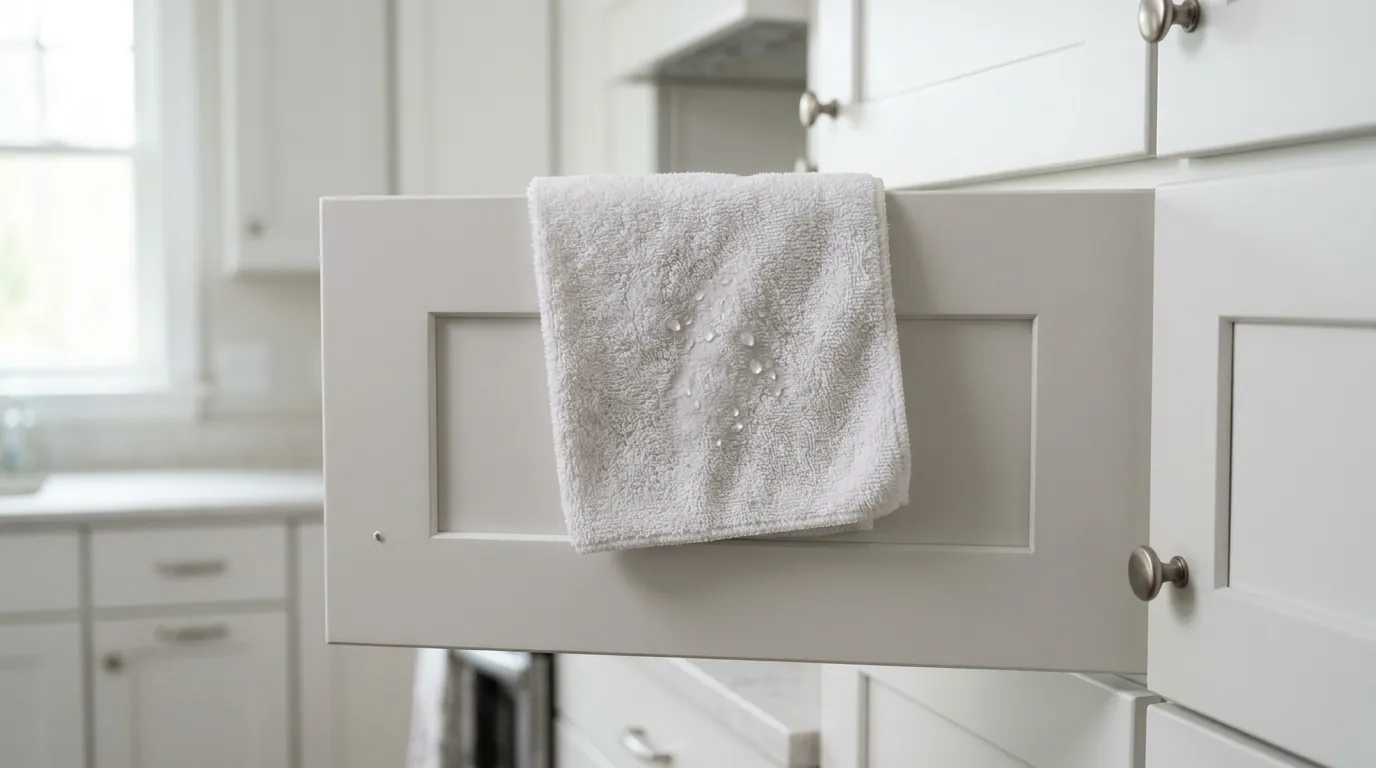
A soft cloth wiping the edge of a white cabinet door
Do: wipe, then dry

When you compare cabinets

The box, the shelves and the drawer boxes are where the sheet material shows. These checks take one visit to a display floor.

  • ✓Ask which sheet material the box, the shelves and the drawer boxes use.
  • ✓Compare the box edge, the screw holding and the weight, not only the melamine face.
  • ✓Look at the sink base and the vanity, the parts that see the most water.
  • ✓Wipe standing water instead of letting it air-dry, especially along door edges and the toe kick.

VanStro vanities are built the same way as the kitchen cabinets.

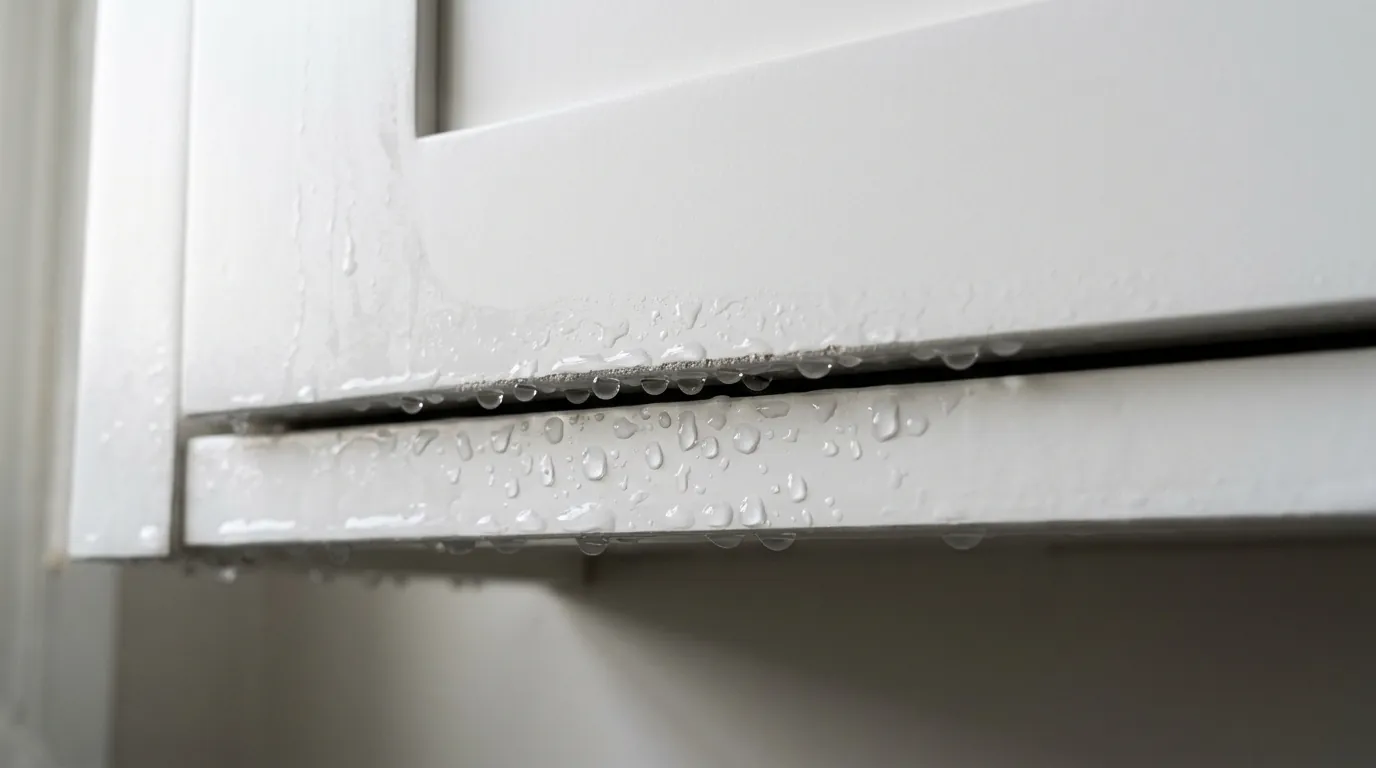
Water pooled along the bottom edge of a cabinet door
Don’t: let water stand

What to avoid

The face of a cabinet tells you very little about what is underneath it.

  • ✕Do not judge a box by its melamine face; the sheet material underneath is what differs.
  • ✕Do not let water sit on an unsealed edge; chips can swell where the water reaches them.
  • ✕Do not keep tightening a screw into particle board; the hole can loosen.
  • ✕Do not use abrasive pads, scouring powders or solvent-based degreasers on the door finish.

Cleaning products will not correct a colour or sheen difference between panels.

04

What to check on a cabinet

The box

The sides, bottom and back carry the countertop and the sink, and they are where water from a leak or a wet floor sits.

Shelves and drawer boxes

Long shelves carry dishes and can sag over time. Drawer boxes take the most daily wear.

The sink base and vanity

These see the most water in any kitchen or bathroom. VanStro vanities are built the same way as the kitchen cabinets.

Material note:Box and shelves are ¾" plywood; drawer boxes are ⅝" plywood with a melamine finish.
¾" plywood box

Most cabinet boxes are made from one of two sheet materials: plywood or particle board. Both are usually covered in melamine, so they look the same from the outside; the difference shows up where water, screws and weight are involved. VanStro kitchen cabinets and bathroom vanities use ¾" plywood boxes.

How the two are made

  • Plywood is thin layers of wood veneer glued together, with the grain of each layer turned against the next.
  • Particle board is wood chips and sawdust pressed together with resin into a flat sheet.
  • MDF (medium-density fibreboard) is wood fibre pressed into a dense, smooth sheet. It is mostly used for doors, not boxes. VanStro doors are ¾" MDF wrapped in PVC thermofoil.

Where the difference matters

PlywoodParticle board
Edges near waterLayers hold their shape better when an edge gets wetChips can swell if water reaches an unsealed edge
Screws and hingesLayered grain holds screws well, including when a hinge is re-screwedScrew holes can loosen if they are tightened repeatedly
WeightLighter than particle board of the same thicknessHeavier
CostCosts moreCosts less

Which parts of a cabinet to check

  1. The box (sides, bottom, back). This carries the countertop and the sink, and it is where water from a leak or a wet floor sits.
  2. Shelves. Long shelves carry dishes and can sag over time.
  3. Drawer boxes. They take the most daily wear.
  4. The sink base and vanity. These see the most water in any kitchen or bathroom.

What VanStro uses

  • Box: ¾" plywood with melamine on both sides.
  • Shelves: ¾" cabinet-grade plywood with finished front edges.
  • Drawer boxes: ⅝" plywood with a melamine finish.
  • Doors: ¾" MDF Shaker doors wrapped in PVC thermofoil with a matte soft-touch finish.
  • Bathroom vanities are built the same way as the kitchen cabinets.

Caring for any cabinet box

Wipe up standing water instead of letting it air-dry, especially along door edges and the toe kick. Apply cleaner to the cloth, not directly onto the cabinet, so it does not pool in seams. See cabinet care for details.

VanStro Download Centre·Vanity guides are listed under Downloads.

Download the cabinet care and vanity guides

The Download Centre holds the assembly and installation guides for bathroom vanities. The cabinet care guide covers doors, boxes and hardware in more detail.

Open the Download Centre